Our Practice
Structure, the letterboard, and what real progress looks like.
The Letterboard
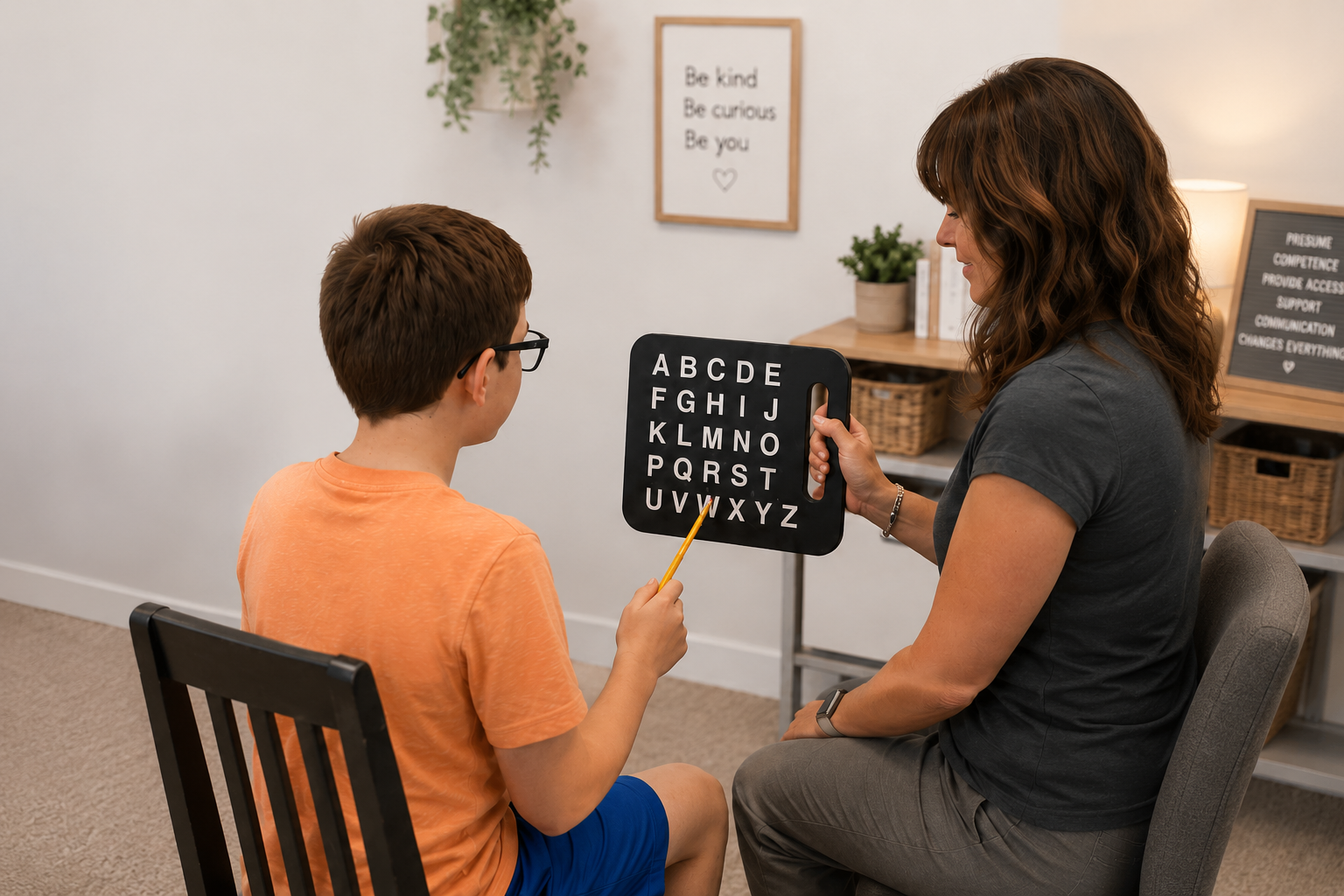
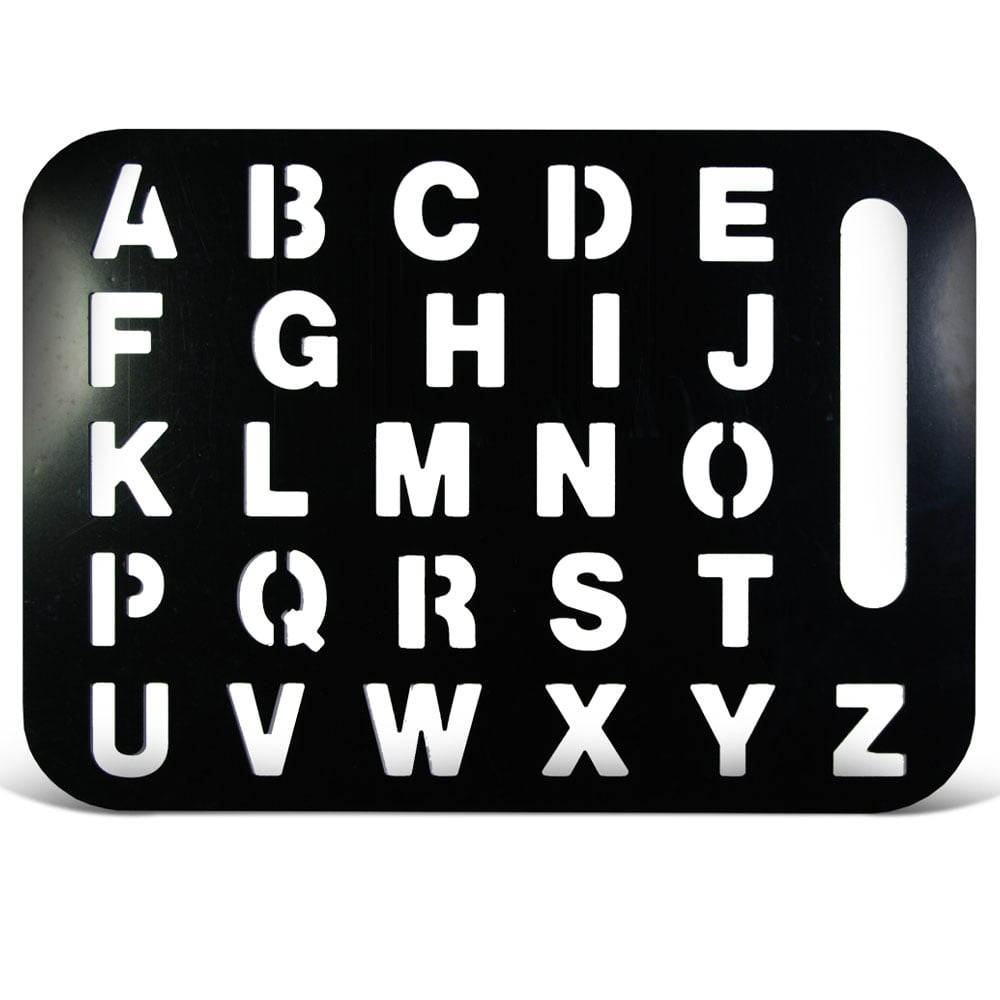
The letterboard is exactly what it looks like — letters, arranged in a grid. Nothing digital. Nothing complicated. Just a surface where a student can point to one letter at a time and build words, sentences, and eventually whole paragraphs.
For students with motor planning differences, the letterboard is a bridge. It separates the act of thinking from the act of speaking — and in doing so, it gives many students their first real opportunity to show what they know.
We begin with simple motor warm-ups. We build complexity deliberately and carefully. And we never assume a student cannot do something before they have had the chance to try.
Structure
Every session begins with the practitioner observing the student's regulation and motor readiness for learning. When needed, movement, breathing, sensory strategies, or other regulation supports are incorporated to help the student achieve an optimal state for purposeful engagement. A regulated student is better able to participate in focused learning and purposeful communication.
Each lesson is built around a topic — history, science, literature, current events — written at an appropriate level and delivered with genuine respect for the student's intelligence. We read. We explain. We make space for curiosity.
Questions are scaffolded from known to open. We start with what the student already knows, move through semi-open and inferential questions, and build toward fully open questions where the student's own perspective and voice take center stage. Every question type has a purpose.
The practitioner uses gestural and verbal prompting to support purposeful motor responses toward the letterboard. As the speller's motor abilities and independence increase over time, these supports are systematically faded — allowing the student to demonstrate increasingly independent and reliable communication through spelling.
Every response is tracked — correct, incorrect, or skipped. At the end of the session, an accuracy score is calculated and recorded. Over time, this data tells a clear story: not of intelligence, but of motor regulation and the steady climb toward independence.
The Accuracy Chart
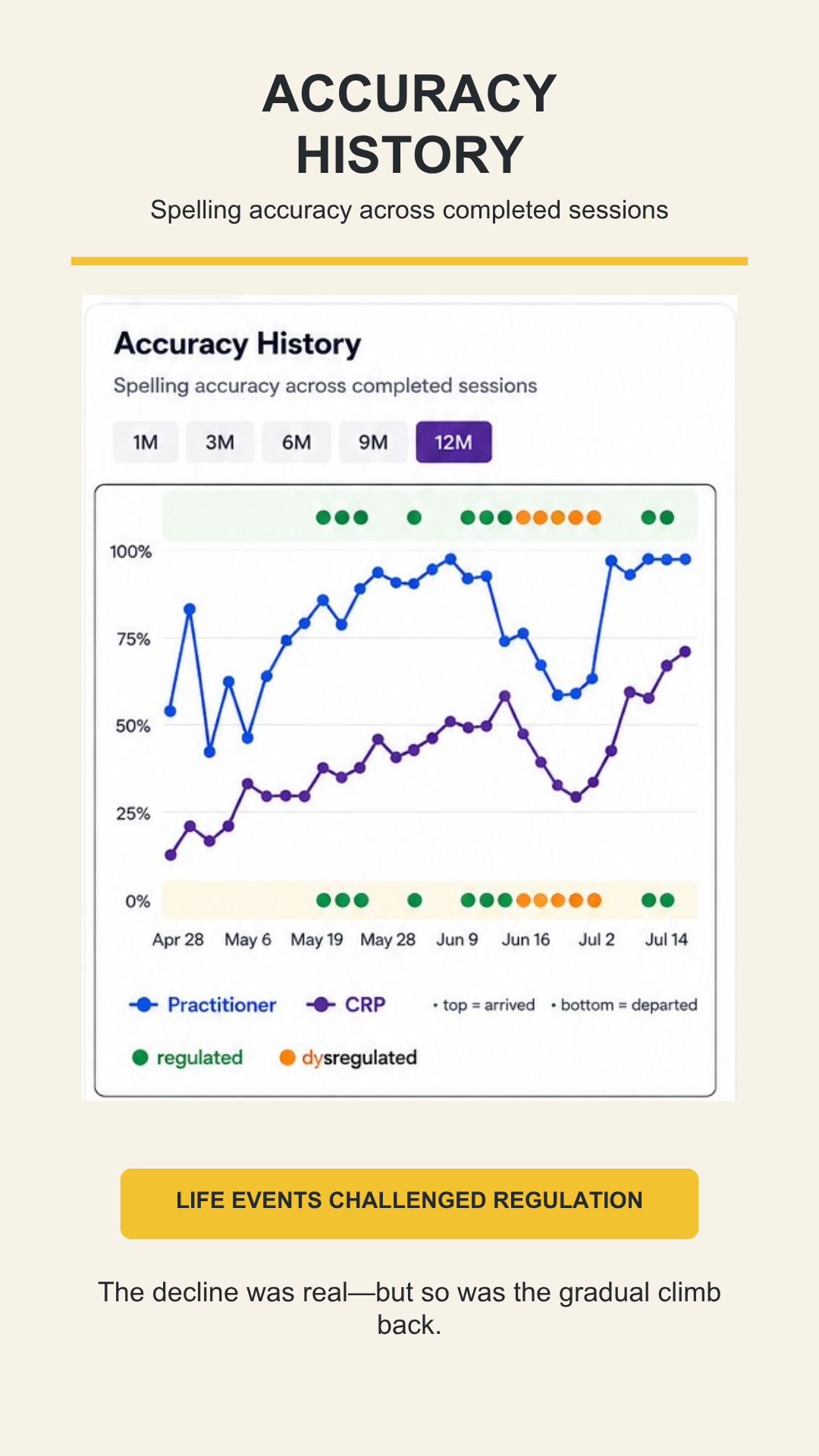
When you look at a student's accuracy chart over time, you are not seeing a report card. You are seeing a map of a human nervous system learning to regulate itself.
A dip in accuracy is not failure. It is often a dysregulation event — a hard day, a change in routine, something sensory. And the climb back up tells you something powerful: the student did not give up.
We share this chart with every family. We explain what it means. We celebrate the climb, not just the peak.
✦
After every session, accuracy data is recorded. Families can see exactly how their student performed and how that has changed over time.
✦
Full transcripts of what was asked and how the student responded are documented and available to share with families, educators, and support teams.
✦
Families are not waiting-room bystanders. They are partners. We explain what we see, what it means, and how to support the work between sessions.
Whether you're a family exploring S2C for the first time or looking for a practitioner who will take your student seriously — we'd love to connect.